
Working capital adjustments now appear in 90% of private M&A deals, shifting Latin America sale prices by millions.
Latin America’s M&A market reached $114.3 billion in 2025, up 16% year over year. Locked box deals fix the price at signing, while completion accounts adjust it after closing based on actual working capital.
The Startup VC helps Latin American founders and family businesses prepare for exits across Brazil, Mexico, and Colombia. This guide covers how working capital adjustments and locked box mechanisms work. It explains how they differ and the exact steps sellers can take to protect their sale price.
What Is a Working Capital Adjustment in an M&A Deal?
A working capital adjustment is a purchase price mechanism. It raises or lowers the sale price based on working capital at closing. It compares actual working capital against an agreed target, called the peg. If working capital falls below the peg, the seller receives less. If it exceeds the peg, the seller receives more.
This mechanism protects both sides of the deal:
- Buyers get assurance the business has enough cash and inventory to keep running after closing.
- Sellers avoid losing value from normal swings in the business cycle.
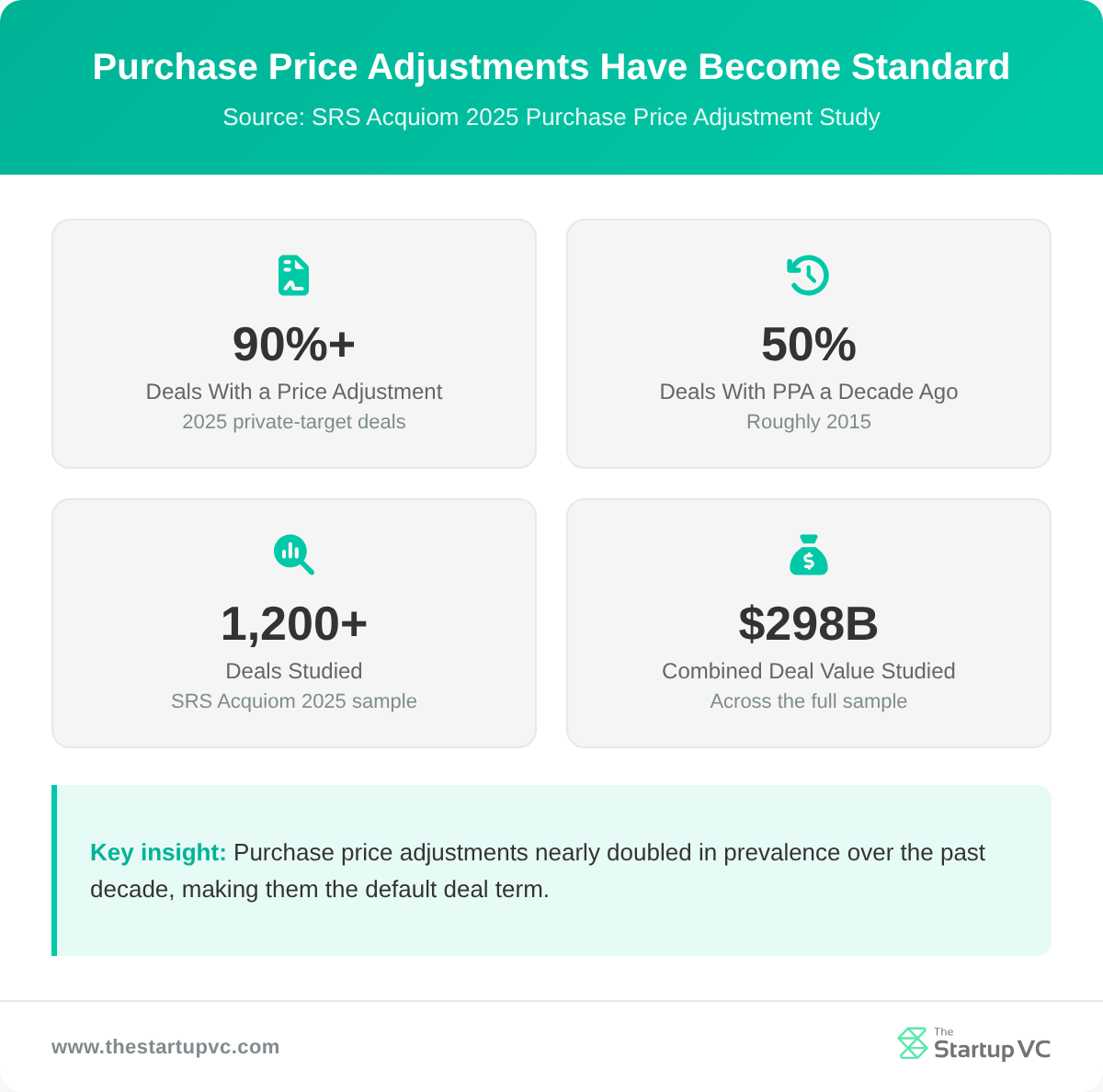
More than 90% of private-target M&A deals now include a working capital adjustment. That is up from about 50% a decade ago. A 2025 study of over 1,200 deals worth $298 billion confirms the trend. The adjustment is now the single largest source of disputes after closing.
What Counts as Working Capital in an M&A Deal?
Working capital includes cash needed to run daily operations. Buyers and sellers typically define it using four line items:
- Accounts receivable. Money owed to the business by customers.
- Inventory. Raw materials, work in progress, and finished goods.
- Accounts payable. Money the business owes to suppliers.
- Accrued liabilities. Short-term obligations like payroll and taxes.
Debt, cash, and long-term assets are usually excluded. The purchase agreement defines exactly which accounts count, since this list can change the target by millions of dollars.
How Is the Working Capital Target Set?
The working capital target is set by averaging the company’s working capital over 12 to 24 months. This average smooths out seasonal spikes and one-time events. Buyers and their accountants review monthly balance sheets to build the target.
The target, or peg, becomes a fixed number in the purchase agreement. At closing, the buyer compares actual working capital to this peg. The target is usually based on 12 to 24 months of historical averages and the company’s operating cycle.
What Is a Locked Box Mechanism in M&A Transactions?
A locked box mechanism is a pricing structure that fixes the purchase price at signing using a historical balance sheet. The parties agree on a locked box date, often the most recent audited financial statements. From that date forward, the buyer is treated as the economic owner of the business.
This structure removes the need for a post-closing true-up. Because the price is fixed early, the seller knows exactly how much they will receive. The buyer takes on the risk and reward of the business from the locked box date. This happens even before the deal legally closes.
Locked box structures have grown more popular in strong seller’s markets. Sellers and financial investors like the clean, fast exit this structure provides. Many Latin American buyers now pay cash with a locked box or post-closing price adjustment built into the deal structure.
What Counts as Leakage in a Locked Box Deal?
Leakage includes any value the seller extracts from the business after the locked box date. The purchase agreement lists prohibited payments in detail.
| Payment Type | Status |
|---|---|
| Dividend payments to shareholders | Prohibited |
| Management fees paid to the seller | Prohibited |
| Loans to shareholders or related parties | Prohibited |
| Bonuses or transaction costs outside the ordinary course | Prohibited |
| Normal salaries | Permitted |
If leakage occurs, the seller must repay the buyer dollar for dollar. Permitted leakage, like normal salaries, is usually carved out and agreed in advance.
How Does a Locked Box Deal Differ From a Completion Accounts Deal?
A locked box deal differs from a completion accounts deal by when the price gets fixed. Locked box pricing is fixed at signing, using historical accounts. Completion accounts pricing is provisional at signing. It is finalized after closing, using the target’s actual financial position.
Sellers tend to prefer locked box deals for speed and certainty. Buyers tend to prefer completion accounts for accuracy, since the price reflects the business at the moment of transfer. The two mechanisms differ across five main factors: pricing timing, risk allocation, negotiation cost, dispute risk, and typical deal size.
| Factor | Locked Box | Completion Accounts |
|---|---|---|
| Price timing | Fixed at signing | Finalized after closing |
| Risk from signing to closing | Buyer bears it | Seller bears it |
| Post-closing adjustment | None | Yes, based on actual figures |
| Dispute rate | Low | 60-70% of deals see a dispute |
| Best fit | Clean, fast exits; PE-backed sellers | Deals with longer signing-to-closing gaps |
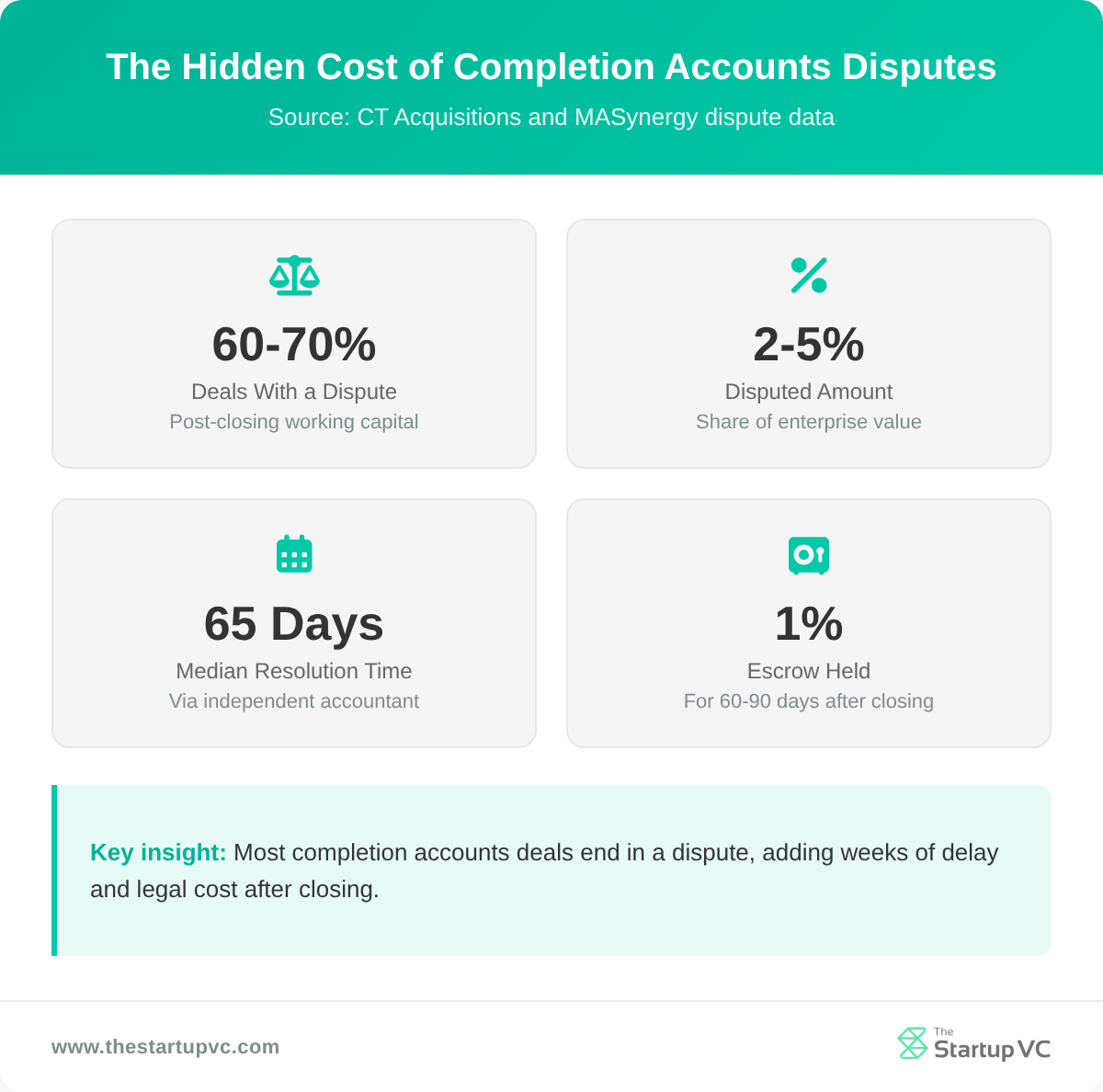
Disputes over completion accounts happen often. Between 60% and 70% of these deals see a post-closing working capital dispute. The average disputed amount runs 2% to 5% of enterprise value. Unresolved disputes go to an independent accountant named in the agreement. That accountant’s decision is final, and resolution takes a median of 65 days.
Why Do Buyers and Sellers Negotiate Working Capital Targets in Latin America?
Buyers and sellers negotiate working capital targets in Latin America because local conditions vary widely. Seasonality, inflation exposure, and inconsistent accounting quality all play a role. These factors make a single working capital number hard to agree on.
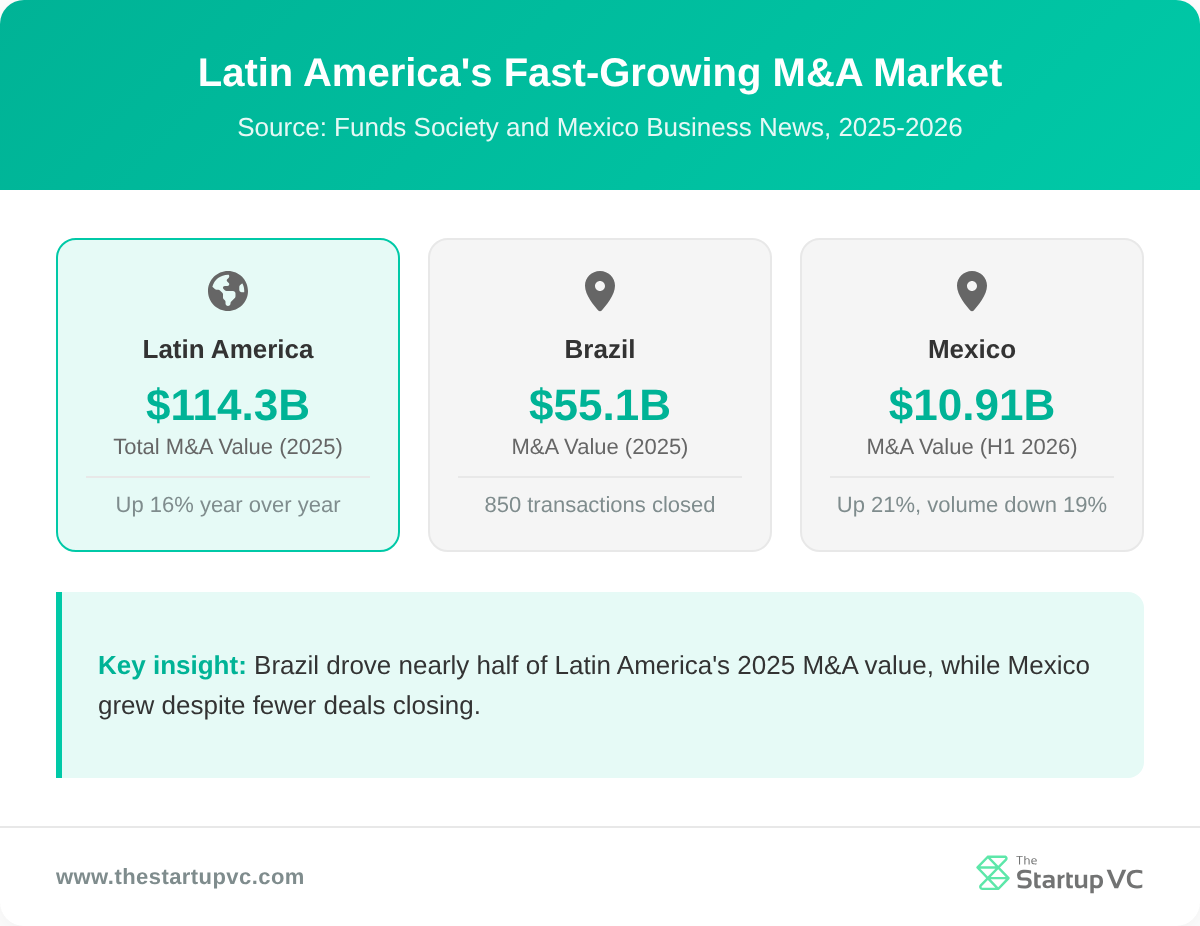
Latin America’s M&A market gives both sides reason to negotiate carefully. The region reached $114.3 billion in deal value in 2025, up 16% year over year. Brazil alone recorded 850 transactions worth $55.1 billion. Mexico’s market value rose to $10.91 billion in the first half of 2026, even as deal volume dropped 19%.
How Does Seasonality Affect the Working Capital Target?
Seasonality affects the working capital target by distorting a straight 12-month average. A retailer with a strong December season will show very different working capital in December than in June. Buyers typically analyze 12 to 24 months of historical data to isolate these patterns and strip out one-time anomalies.
Buyers often push for the highest defensible 12-month average. Sellers push for the lowest. Many deals resolve this with rolling averages. Others match the peg to the specific month when closing is expected.
How Does Local Accounting Quality Affect Working Capital Negotiations?
Local accounting quality affects working capital negotiations by changing how much diligence buyers demand. Reported financials in Latin America often hide real liabilities, from unrecorded payroll obligations to informal supplier debt. Local diligence teams find these issues before they cost buyers at closing.
Easing inflation and improving financing conditions across Brazil, Mexico, and Colombia have supported new M&A activity. Still, buyers price in extra scrutiny for founder-owned companies with less formal bookkeeping. Building a strong due diligence data room in Latin America before talks start reduces this friction.
What Are the Main Steps to Prepare a Latin American Business for a Working Capital Adjustment or Locked Box Deal?
The main steps include cleaning up financial records and tracking working capital trends. Founders should build a defensible target months before negotiations start.
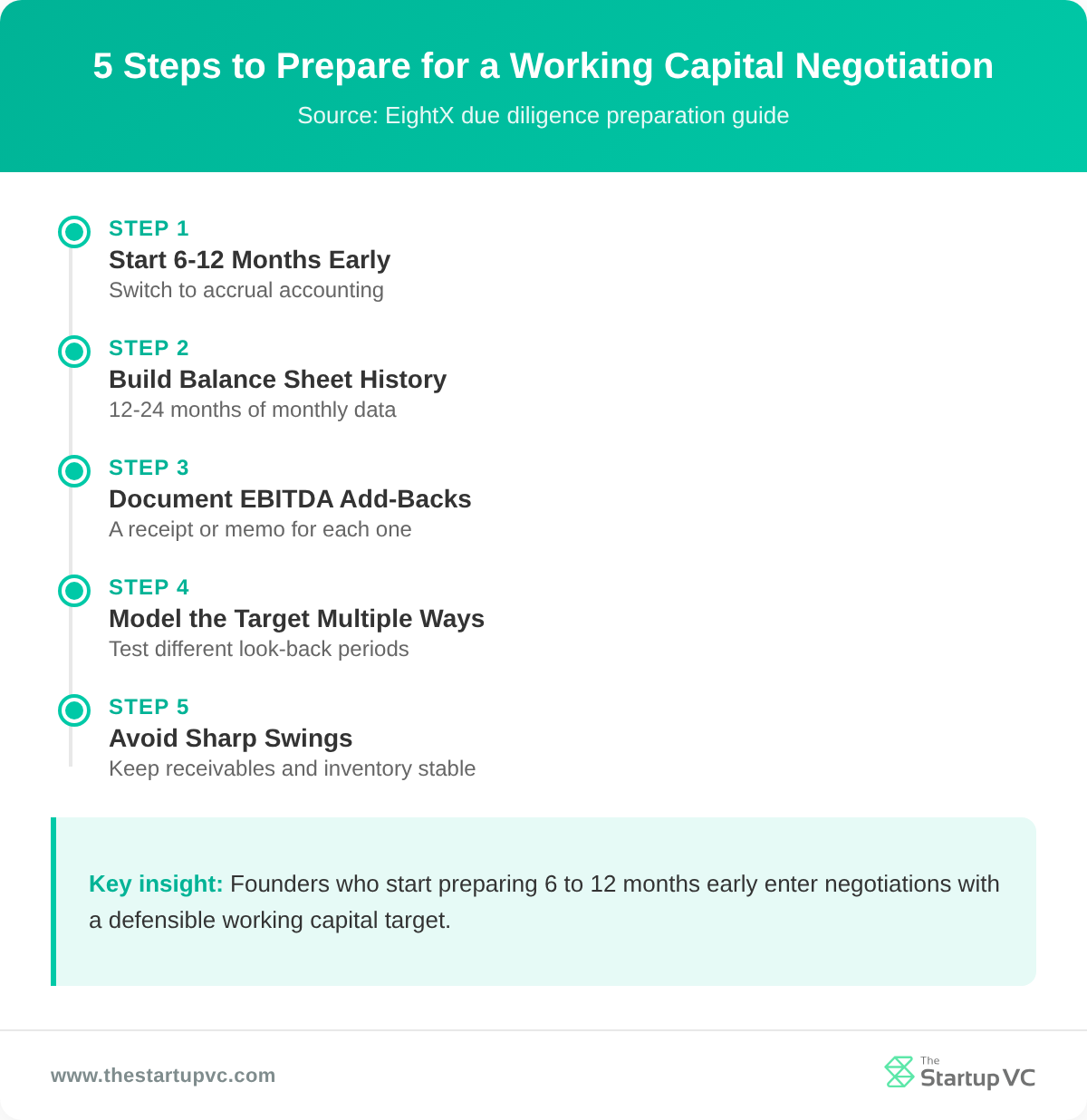
Founders should follow these five steps:
- Start 6 to 12 months before a sale. Switch to accrual accounting and close the books in under 10 days each month.
- Build a monthly balance sheet history. Review 12 to 24 months of data to spot seasonal swings and one-time events.
- Document every EBITDA add-back. Keep a receipt or memo behind each adjustment claimed.
- Model the working capital target multiple ways. Test different look-back periods before the buyer proposes one.
- Avoid sharp working capital swings before the deal. Large changes in receivables or inventory make normalization harder to defend.
Rollover equity appears in 57% of mid-market Latin America deals, and earnouts appear in about one-third of private-target transactions. Both structures interact directly with working capital terms. Model them together during preparation.
Founders who prepare a company for sale in Latin America enter negotiations with a defensible target. This puts sellers ahead before a buyer sets the terms.
What Questions Do Latin American Business Owners Ask Most Often About Working Capital Adjustments and Locked Box Deals?
How Much Does a Working Capital Dispute Typically Cost?
A working capital dispute typically costs 2% to 5% of enterprise value in disputed amount. Independent accountant fees add further cost, often split between the buyer and seller. Disputes also add a median of 65 days to closing.
Which Mechanism Is Better for Smaller Deals in Latin America?
The best mechanism for smaller deals in Latin America is often the locked box structure. It avoids the legal and accounting cost of a post-closing true-up. Completion accounts fit larger deals with longer gaps between signing and closing.
Can a Seller Negotiate the Working Capital Target After Signing?
No, sellers cannot renegotiate the working capital target after signing. The target must be agreed before the purchase agreement is finalized. Sellers who want a higher target should raise the issue early in due diligence.
How Long Does a Working Capital Adjustment Process Take?
A working capital adjustment process takes about two months on average, from preliminary calculation to final resolution. Straightforward cases close faster. Disputes that reach an independent accountant add roughly 65 more days.
Is a Locked Box Deal Riskier for Buyers?
Yes, a locked box deal is riskier for buyers. Buyers take on business risk from the locked box date, before legal closing. Strong leakage protections in the purchase agreement reduce this risk.
What Documents Do Sellers Need to Support a Working Capital Target?
Sellers need three main documents to support a working capital target. These include 12 to 24 months of monthly balance sheets, an EBITDA add-back schedule, and a deferred revenue treatment memo. These documents let a buyer verify the proposed target quickly.
Ready to Prepare Your Business for a Successful Exit in Latin America?
Working capital adjustments and locked box terms can shift your final sale price by millions of pesos, reais, or dollars. The Startup VC is Craig Dempsey’s family office and company builder, creating and backing scalable ventures across Latin America. Our team brings hands-on experience preparing founders for exit, from clean financials to deal structure. We help you enter negotiations with a defensible working capital target and clear leakage protections. Contact us today to start preparing your business for a successful sale.