
Latin America closed 3,061 M&A deals worth EUR 280 billion in 2024, and deal counts rose 12% in 2025.
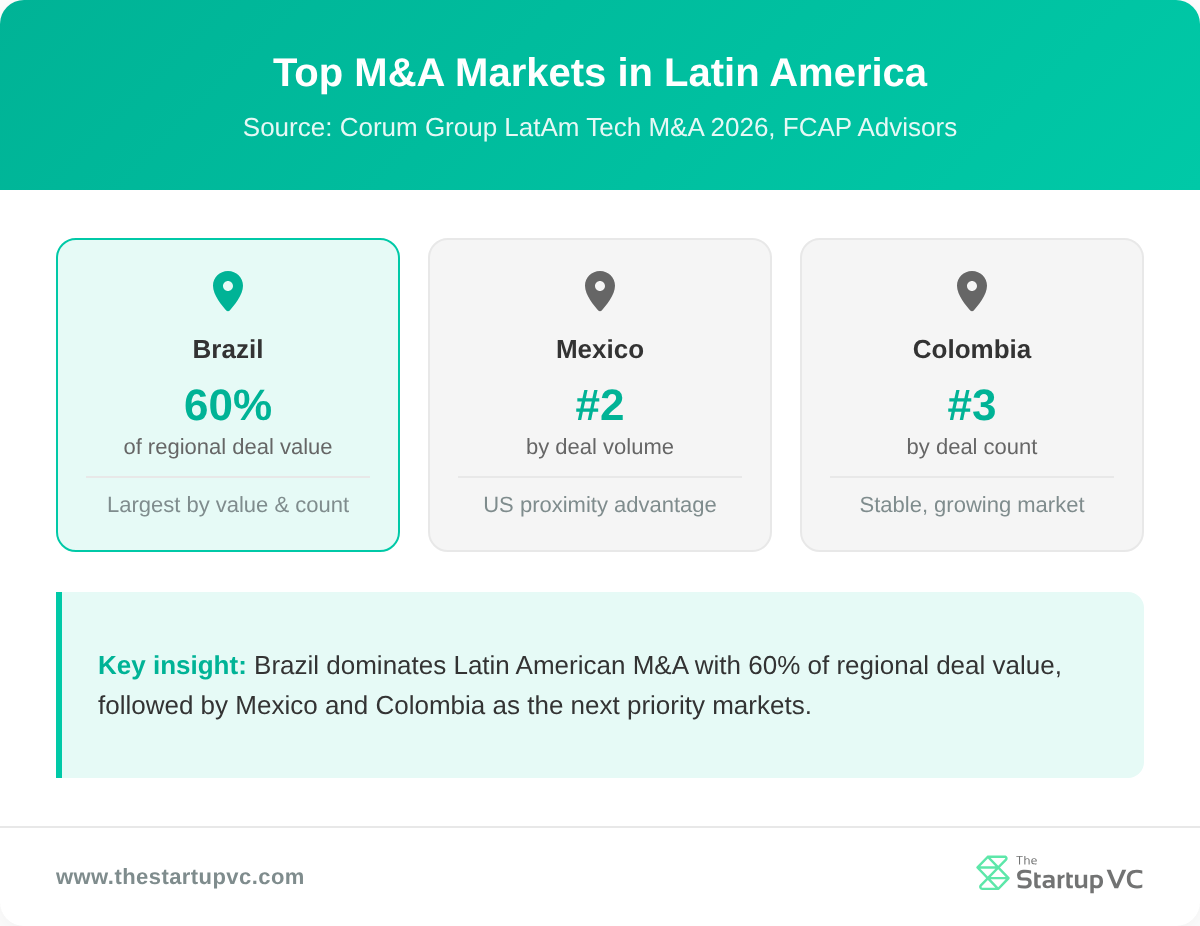
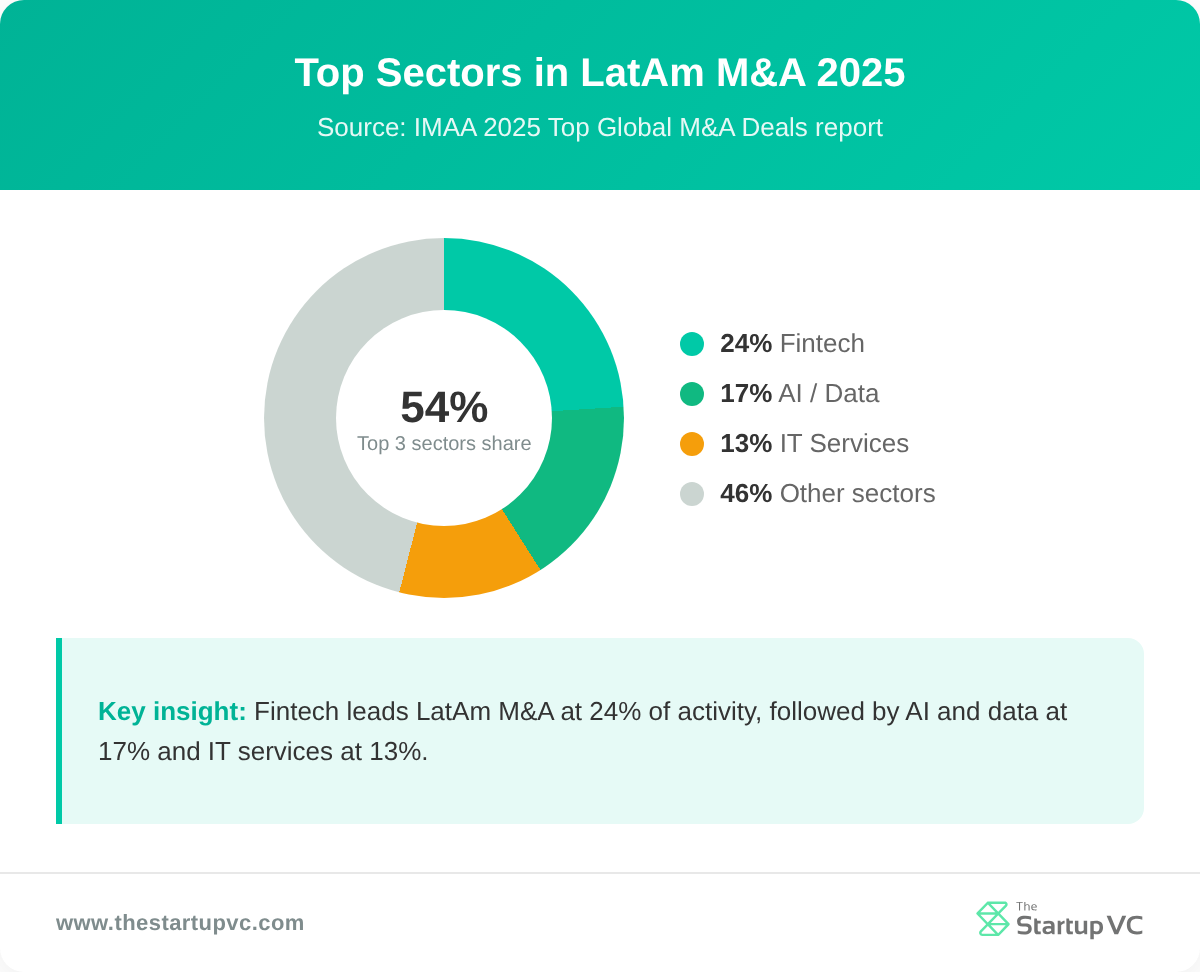
Buy-side sourcing in Latin America blends investment banks, brokers, proprietary outreach, and broken auctions. Brazil drives 60% of regional deal value. Fintech leads at 24% of M&A activity, AI and data follow at 17%, IT services at 13%.
The Startup VC operates as Craig Dempsey’s family office and company builder across Latin America. Our portfolio includes Biz Latin Hub, GGI, and MTP, each built through hands-on sourcing and execution. Below, you will find the channels, criteria, and outreach mechanics that drive successful LatAm buy-side mandates.
What Is Buy-Side Deal Sourcing in Latin America?
Buy-side deal sourcing in Latin America is the systematic search for acquisition targets that match a buyer’s investment criteria. The buyer pays an advisor or runs an internal team to find, screen, and approach companies for purchase. Sell-side mandates work in reverse, where a banker represents an owner seeking a buyer.
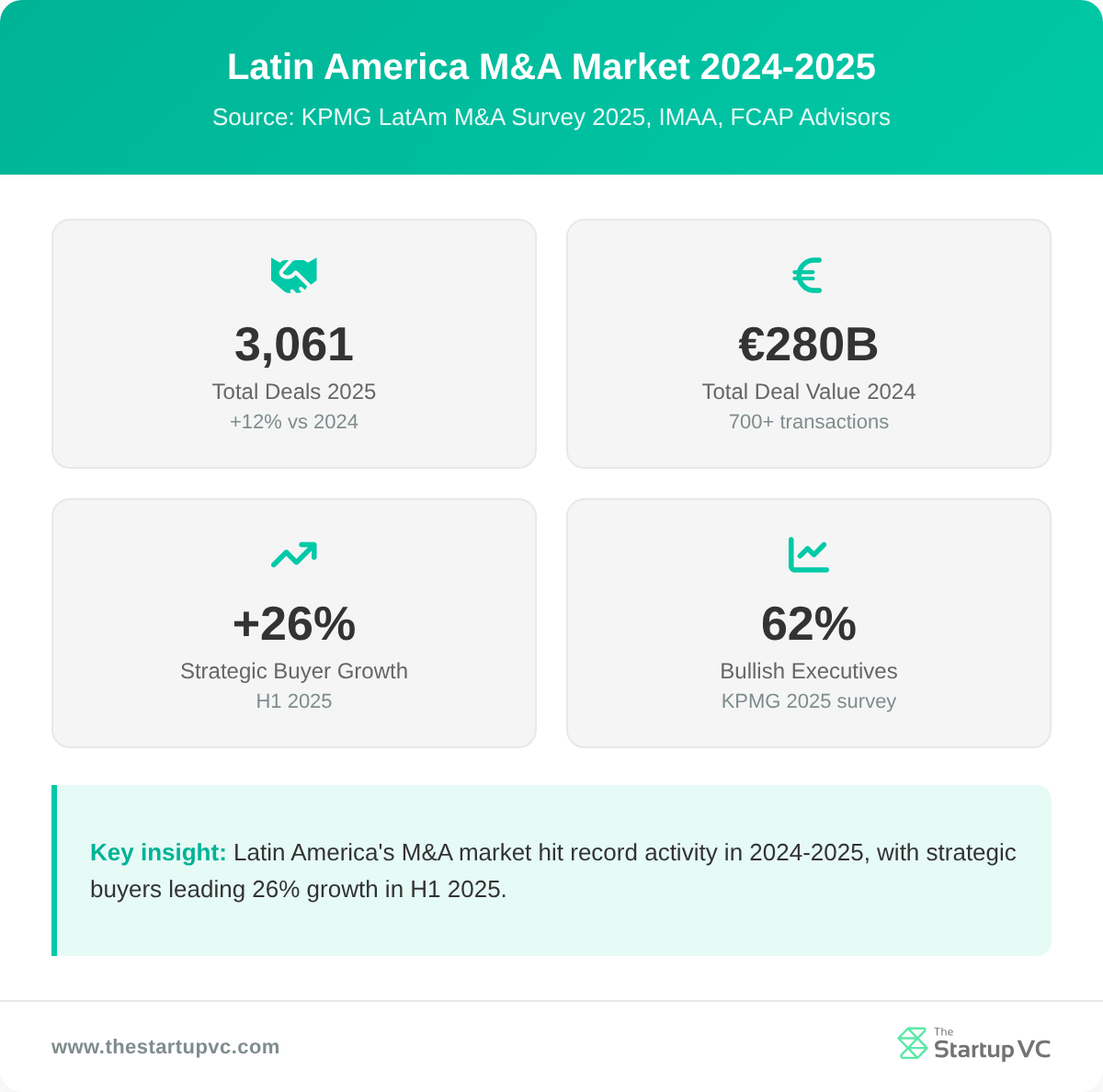
The LatAm market has grown sharply. Of 3,061 total transactions in 2025, 1,906 happened entirely within the region. The remaining 1,155 involved at least one foreign party. Strategic buyers grew acquisitions 26% in the first half of 2025.
Buyer sentiment is strong. KPMG’s 2025 LatAm M&A survey found 62% of executives believe the regional opportunity has never been greater. Another 57% expect their deal appetite to rise through 2026.
LatAm sourcing differs from US deal flow in three ways:
- Relationship-driven culture. Warm introductions and family office networks open doors that cold outreach cannot.
- Currency risk. Most buyers prefer targets with USD or EUR revenue as a hedge against local volatility.
- Country concentration. Brazil alone drives 60% of regional deal value, with Mexico, Colombia, Chile, and Argentina rounding out the top five.
If you are weighing a full acquisition over building from scratch, our guide on how to buy a company in Latin America covers the end-to-end process.
Why Is Proprietary Deal Sourcing Better Than Auctions in LatAm?
Proprietary deal sourcing is better than auctions because it delivers lower entry prices and stronger seller relationships. Buyers approach owners directly before any banker or broker is involved. This cuts competition and gives the buyer pricing leverage.
The math is clear. Proprietary deals achieve 15-20% lower entry multiples than auction deals. Auctions generate a 0.5x-1.5x EBITDA premium because multiple bidders push price upward.
But proprietary sourcing has tradeoffs. Close rates are lower because owners may not be ready to sell. Intermediary-led deals close roughly 18% more often, because brokers only bring pre-vetted sellers to market.
| Sourcing Path | Entry Multiple | Close Rate | Best For |
|---|---|---|---|
| Proprietary outreach | 15-20% lower | Lower | Patient buyers with strong networks |
| Broker auctions | Market+ premium | Higher | Buyers with deal certainty needs |
| Broken auctions | Mid-range | Mid-range | Opportunistic buyers with quick close |
Broken auctions deserve a closer look. These are processes where the seller’s banker failed to find a buyer at the asking price. The seller is motivated. The buyer has leverage on price and terms. Broken auctions sit between proprietary and live auction deals.
LatAm proprietary deals rely heavily on local presence. Foreign buyers without a regional team often lose out to local PE funds. Local funds move faster and tap regional relationships.
What Sourcing Channels Find Acquisition Targets in Latin America?
The sourcing channels in Latin America are investment banks, brokers, industry conferences, proprietary outreach, and family office networks. Each channel covers a different deal size and quality tier.
Investment banks handle the largest cross-border deals. Bank of America was named Latin America’s Best Investment Bank in the 2024 Euromoney Awards. Goldman Sachs, JPMorgan, Itaú BBA, and BTG Pactual lead the upper middle market.
Brokers and M&A boutiques cover the lower middle market. They bring pre-vetted sellers with prepared financials. Conversion rates are higher, but multiples reflect competitive bidding.
The main LatAm sourcing channels include:
- Investment banks. Best for deals above $50M enterprise value. Cross-border reach and full process management.
- M&A boutiques and brokers. Best for $5M-$50M deals. Pre-vetted sellers, faster process.
- Industry conferences. LAVCA Week, Endeavor’s Scale-Up Summit, and Latin Lawyer events connect buyers with founders.
- Proprietary outreach. Direct cold and warm outreach to target companies before they go to market.
- Family office networks. Trusted peer-to-peer referrals from family offices like The Startup VC.
- Portfolio company referrals. Existing investments surface adjacent targets through customer and supplier networks.
Family office networks deliver the highest conversion in LatAm. Founders trust referrals from peer principals more than cold calls from international funds. The Startup VC’s investment focus targets B2B service and tech-enabled ventures across Latin America. A defined thesis sharpens sourcing.
How Do You Define Target Criteria for a LatAm Acquisition?
You define target criteria for a LatAm acquisition by setting filters on size, sector, geography, ownership type, and operational quality. Each filter narrows the universe from thousands of candidates to a workable long list.
The first filter is size. Most private equity platforms require a minimum of $2M EBITDA. The preferred range is $3-10M. Add-on acquisitions can run smaller, often $500K-$2M EBITDA. Search funds typically target this owner-succession range as well.
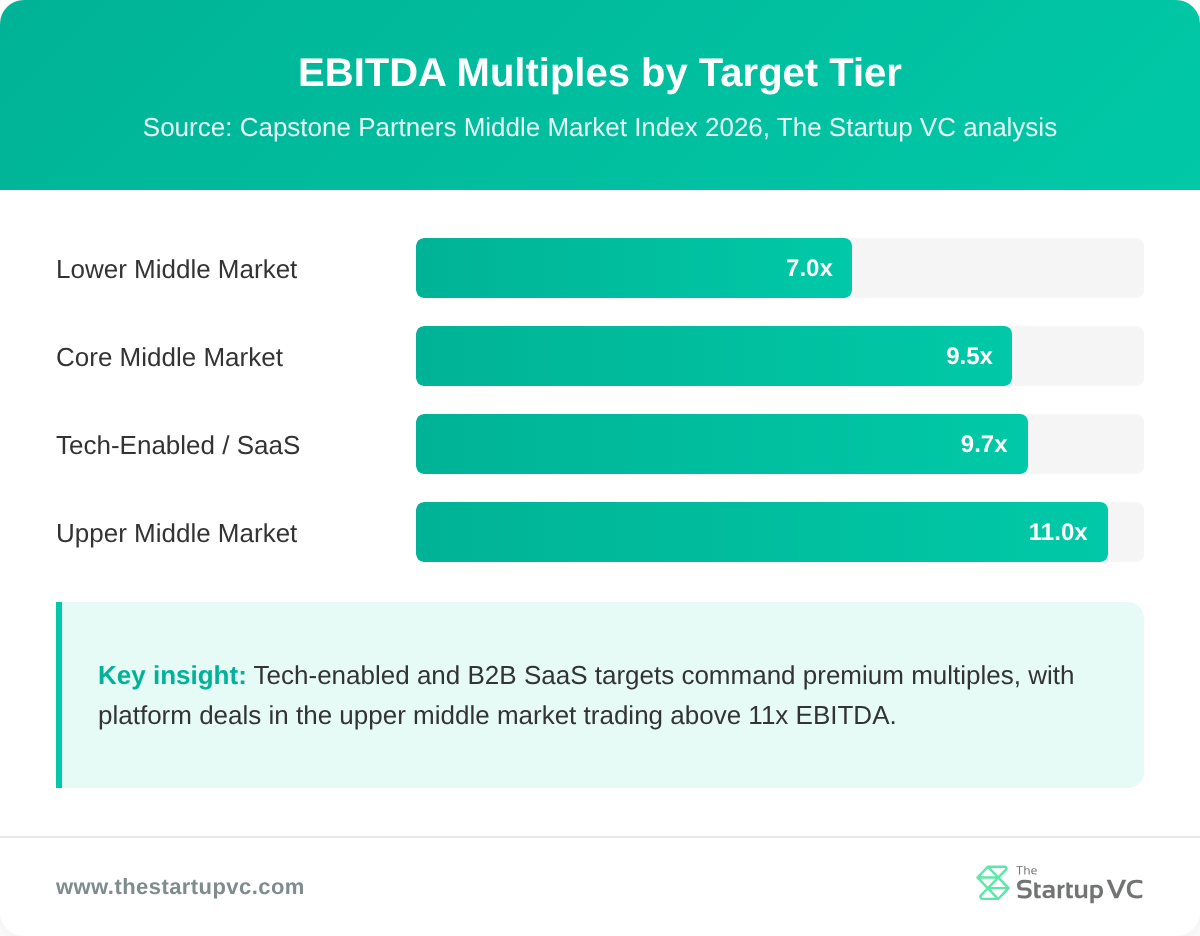
The second filter is valuation expectation. LatAm tech-enabled firms trade at roughly 9.7x EBITDA in 2026. B2B SaaS commands the highest multiples. Traditional services run lower.
| Target Tier | EBITDA Range | Multiple Range | Common Sectors |
|---|---|---|---|
| Lower middle market | $1M-$5M | 4x-7x | Services, distribution |
| Core middle market | $5M-$25M | 7x-10x | B2B services, manufacturing |
| Tech-enabled / SaaS | $2M-$25M | 8x-12x | SaaS, fintech, healthtech |
| Upper middle market | $25M+ | 9x-13x | Platform plays, regional leaders |
The third filter is revenue quality. Hard-currency revenue is critical. Most LatAm acquirers prefer USD or EUR revenue as a hedge against local currency volatility. Recurring revenue beats project-based income.
The fourth filter is operational benchmarks. Acquirers look for an LTV to CAC ratio of at least 3:1. Gross margins above 50% signal healthy unit economics. Strong management teams that stay after closing reduce integration risk.
The final filter is country. Brazil, Mexico, Colombia, Chile, and Argentina dominate LatAm M&A. Choose markets that match your portfolio strategy and operational footprint.
For founders preparing to sell, our guide to due diligence in Latin America walks through what buyers verify before close.
How Do You Build a Target List and Run Outreach in Latin America?
You build a target list and run outreach in Latin America by combining database research with relationship-driven introductions. Start with a defined ideal customer profile (ICP) and work outward through tiered outreach.
Step one is list construction. Use ICP filters covering country, sector, revenue band, EBITDA range, and ownership type. Data tools like ZoomInfo, Data Axle, Grata, and RocketReach supply LatAm contact data, funding events, and ownership signals.
Step two is segmentation. Tier the list by fit and warmth:
- Tier 1. Perfect fit plus warm path through a mutual contact.
- Tier 2. Perfect fit but cold outreach required.
- Tier 3. Good fit, watchlist for future cycles.
Step three is CRM setup. HubSpot and Pipedrive let buyers track every interaction across hundreds of targets. Log calls, emails, and meeting notes. Automate follow-up sequences with personalized templates.
Step four is outreach. Warm introductions through trusted intermediaries deliver the highest response rates. Lawyers, accountants, and peer founders open doors that cold email cannot. Personalized cold outreach works as a backup, but generic mass email fails in LatAm’s relationship-driven culture.
Step five is qualification. Initial calls confirm seller interest, expected valuation, and timing. Disqualify quickly when targets fail key filters. Move qualified targets into a structured indication-of-interest and LOI process.
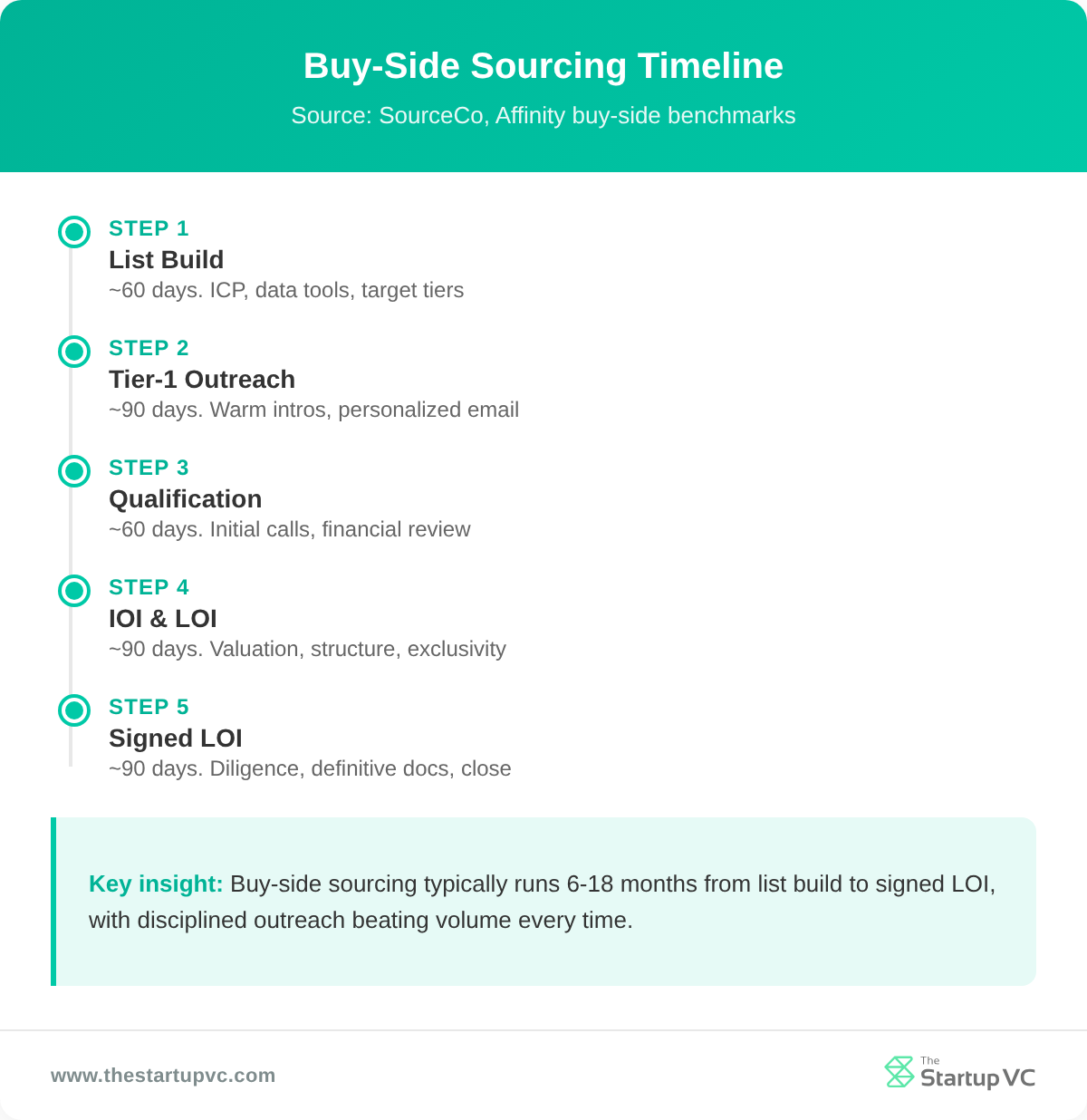
Buy-side sourcing mandates typically run 6-18 months from list build to signed LOI. Patience and discipline matter more than volume. Craig Dempsey built Biz Latin Hub across 17 LatAm countries using this exact playbook. He sourced partners and acquisitions through warm networks before any banker got involved.
What Questions Do Buyers Ask Most Often About LatAm Acquisition Sourcing?
Buyers most often ask about timing, costs, country priorities, and sector demand. Fintech, AI and data, and IT services dominate current LatAm M&A activity.
How long does buy-side sourcing take in Latin America?
Buy-side sourcing takes 6-18 months from list build to signed LOI. The first 60 days cover list construction and tier-one outreach. The next 90-180 days surface qualified targets. Final negotiation and LOI signing run another 60-90 days.
How much do brokers and advisors charge for buy-side mandates?
Buy-side advisors charge a monthly retainer plus a success fee. Retainers run $10K-$50K per month, credited against the final success fee. Success fees range from 1% to 5% of deal value, scaled to deal size.
Which countries offer the best acquisition targets in LatAm?
The best countries for LatAm acquisitions are Brazil, Mexico, Colombia, Chile, and Argentina. Brazil drives 60% of regional deal value. Mexico offers proximity to the US. Colombia and Chile lead in stability and ease of doing business.
What sectors lead M&A activity in Latin America right now?
Fintech leads at 24% of April 2025 M&A activity. AI, data, and automation follow at 17%. IT services come in at 13%. B2B SaaS, healthtech, and tech-enabled services round out the top sectors.
Should you use proprietary outreach or a broker in LatAm?
You should use both. Proprietary outreach finds off-market targets at 15-20% lower multiples. Brokers bring pre-vetted sellers with higher close rates. The best buy-side teams run both channels in parallel.
How do you verify a target’s financials in Latin America?
You verify a target’s financials by combining audited statements, management interviews, and a quality of earnings (QoE) review. Local audit firms and bilingual due diligence teams are essential. Tax compliance and labor liabilities require particular care in LatAm.
Ready to Find Acquisition Targets in Latin America?
The Startup VC is Craig Dempsey’s family office and company builder across Latin America. We run buy-side sourcing the way we built Biz Latin Hub, GGI, and MTP. Warm networks, disciplined target screens, and hands-on operational support drive every mandate. Our team brings 17-country reach and proven playbooks to strategic buyers and PE funds. Contact us today to discuss your buy-side mandate.