
Australian companies doing business in Colombia span mining, fintech, renewable energy, and professional services across a 50-year diplomatic partnership.
Colombia’s exports to Australia reached US$94.08 million in 2024-2025, while Australian monthly exports doubled to AUD 6 million. BHP, South32, Orica, Airwallex, Canva, and Worley all maintain active operations or strategic interests in Colombia’s growing economy.
The Startup VC builds and invests in B2B service ventures across Latin America, including portfolio company Biz Latin Hub. Below, you will find 2026 trade data, tax reform impacts, sector opportunities, and case studies of Australian companies succeeding in Colombia.
What is the relationship between Australia and Colombia?
The relationship between Australia and Colombia is a five-decade diplomatic and trade partnership. Australia and Colombia established official ties in 1976. Since then, both countries have expanded cooperation across trade, education, and energy.
In 2026, the Council on Australia Latin America Relations (COALAR) guides this partnership. COALAR’s Strategic Plan 2024-2027 focuses on energy transition, education, and social connectivity. The Australia-Latin America Future Forum in early 2026 will address emerging opportunities in mining, agriculture, and infrastructure.

Which trade agreements connect Australia and Colombia?
The trade agreements that connect Australia and Colombia include several multilateral frameworks. Both countries participate in the World Trade Organization and the OECD. They also share membership in the Cairns Group and the Forum for East Asia Latin America Cooperation.
Australia remains a candidate for Associate Member status in the Pacific Alliance. This bloc includes Chile, Colombia, Mexico, and Peru. The CPTPP also provides a broader framework for trade rules across the Pacific region.
What are COALAR’s strategic priorities for 2024-2027?
COALAR’s strategic priorities for 2024-2027 are outreach, collaboration, social connections, and shared commercial interests. The plan raises visibility of bilateral opportunities through the Australia-Latin America Future Forum. It also builds technical capability through the New Colombo Plan reforms.
| Strategic Pillar | Primary Objective | Key Mechanism |
|---|---|---|
| Outreach and Advocacy | Raise visibility of bilateral opportunities | Australia-Latin America Future Forum 2026 |
| Collaboration and Education | Build technical and research capability | New Colombo Plan 2026 Reforms |
| Social and Cultural Connections | Strengthen people-to-people links | First Nations heritage exchange programs |
| Shared Commercial Interests | Promote investment in priority sectors | Critical Minerals Frameworks and MOUs |
What does bilateral trade between Australia and Colombia look like in 2026?
Bilateral trade between Australia and Colombia in 2026 is a modest but growing exchange. Colombia’s exports to Australia reached US$94.08 million in the 2024-2025 period. Coffee, tea, and spices represent over 70% of Colombia’s total export value to Australia.
Australian exports to Colombia focus on high-complexity products. High-voltage protection equipment and orthopedic appliances lead Australia’s export profile. Between November 2024 and November 2025, monthly Australian exports to Colombia doubled from AUD 3 million to AUD 6 million.
What are Colombia’s top exports to Australia?
Colombia’s top exports to Australia are coffee, cut flowers, and mineral fuels. Coffee alone accounts for US$67.76 million of the US$94.08 million total. New entries include organic chemicals and manufactured apparel.
| Export Category | Value (USD) | Trend |
|---|---|---|
| Coffee, tea, mate, and spices | $67.76 Million | Steady growth in premium segments |
| Cut flowers and live plants | $6.28 Million | Increasing demand for variety |
| Mineral fuels and distillation products | $4.42 Million | Fluctuating with energy prices |
| Vegetable, fruit, and nut preparations | $1.77 Million | Growth in value-added agro-exports |
| Toys, games, and sports requisites | $1.45 Million | New consumer goods entry |
| Organic chemicals | $1.24 Million | Industrial diversification |
What does Australia export to Colombia?
Australia’s exports to Colombia are high-complexity industrial and medical products. High-voltage protection equipment leads the export portfolio. Orthopedic appliances represent the second-largest category.
These exports support Colombia’s infrastructure and healthcare modernization. Monthly export values rose 100% in one year. This acceleration signals growing Colombian demand for Australian industrial solutions.
How does Colombia’s 2026 tax reform affect Australian companies?
Colombia’s 2026 tax reform affects Australian companies by increasing corporate tax rates and dividend withholding taxes. The Financial Law aims to close a COP 26.3 trillion (US$6.5 billion) budget gap. Australian companies in mining and finance face the heaviest impact.
What are the key corporate tax changes in 2026?
The key corporate tax changes in 2026 include a permanent 15% surtax on financial institutions. This brings the total corporate income tax rate to 50% for large entities. The withholding tax on dividends paid to nonresidents rises from 20% to 30%.
Coal companies face a 15% extraction surtax, creating a combined rate of up to 50%. Diesel and gasoline VAT increases from 5% to between 10% and 19%. These changes directly affect Australian mining and energy operations in Colombia.
| Tax Provision | Previous Rate | New 2026 Rate | Impact on Australian Firms |
|---|---|---|---|
| CIT Surtax (Financial) | 5% (until 2027) | 15% (Permanent) | Higher burden on finance and mining |
| Dividend Withholding Tax | 20% | 30% | Higher cost of capital repatriation |
| Coal Extraction Surtax | 10% | 15% | Reduced margins for coal operations |
| Diesel and Gasoline VAT | 5% | 10%-19% (phased) | Increased logistics costs |
| Nonresident Filers | 3% | 5% | Impact on digital service providers |
Why is a Double Taxation Agreement important for Australian companies?
A Double Taxation Agreement is important for Australian companies because it would prevent paying tax twice on the same income. Australia and Colombia currently lack a comprehensive DTA. Companies from Canada, Chile, and the UK already benefit from active tax treaties with Colombia.
The Australia-Latin America Business Council (ALABC) intensified its DTA advocacy in 2026. A treaty would provide non-discrimination clauses and residency tie-breaker rules. Without a DTA, Australian companies pay higher effective tax rates than competitors.
Which Australian mining companies operate in Colombia?
The Australian mining companies that operate in Colombia include BHP, South32, and Orica. These firms focus on critical minerals, nickel production, and mining technology. Australian Mining Equipment, Technology, and Services (METS) exports also play a growing role in Colombia.
- BHP Group – Leverages its Xplor program with ten companies exploring for copper in South America.
- South32 – Operates the Cerro Matoso nickel mine, producing a key input for electric vehicle batteries.
- Orica – Provides blasting technology and environmental monitoring tools to Colombian mines.
- Fortescue – Invests US$6.2 billion globally in green hydrogen and renewable technology applicable to Colombia.
What role does BHP play in Colombia’s mining sector?
BHP plays a role in Colombia’s mining sector as a strategic explorer focused on critical minerals. After merging its oil and gas assets with Woodside Energy in 2022, BHP shifted to “forward-facing” minerals. In 2026, BHP’s Xplor program includes a record cohort of ten exploration companies.
Otrera Resources, a South American explorer, is among BHP’s Xplor cohort. The company aligns with BHP’s global push for copper. Copper is essential for the energy transition, and Colombia holds significant reserves.
How does South32 contribute to critical minerals production?
South32 contributes to critical minerals production by operating the Cerro Matoso nickel mine in Colombia. Nickel is a vital component of electric vehicle batteries. Cerro Matoso’s output is a strategic asset in the global clean energy transition.
South32 also invests in zinc and manganese through its Hermosa project in North America. These minerals are relevant to Colombia’s geological potential. South32’s diversified approach positions Colombia as a key hub for battery metals.
What does Orica bring to Colombian mining innovation?
Orica brings advanced blasting technology and environmental monitoring to Colombian mining. At the Congreso Nacional de Mineria 2025 in Cartagena, Orica was highlighted as a driver of innovation. The company helps Colombian mines meet stricter sustainability requirements.
Colombian mines now adopt Australian software for 3D resource modeling. Automated ventilation systems and real-time seismic monitoring are also in use. These METS exports help operators increase productivity while reducing environmental impact.
How is the energy transition creating opportunities for Australian companies?
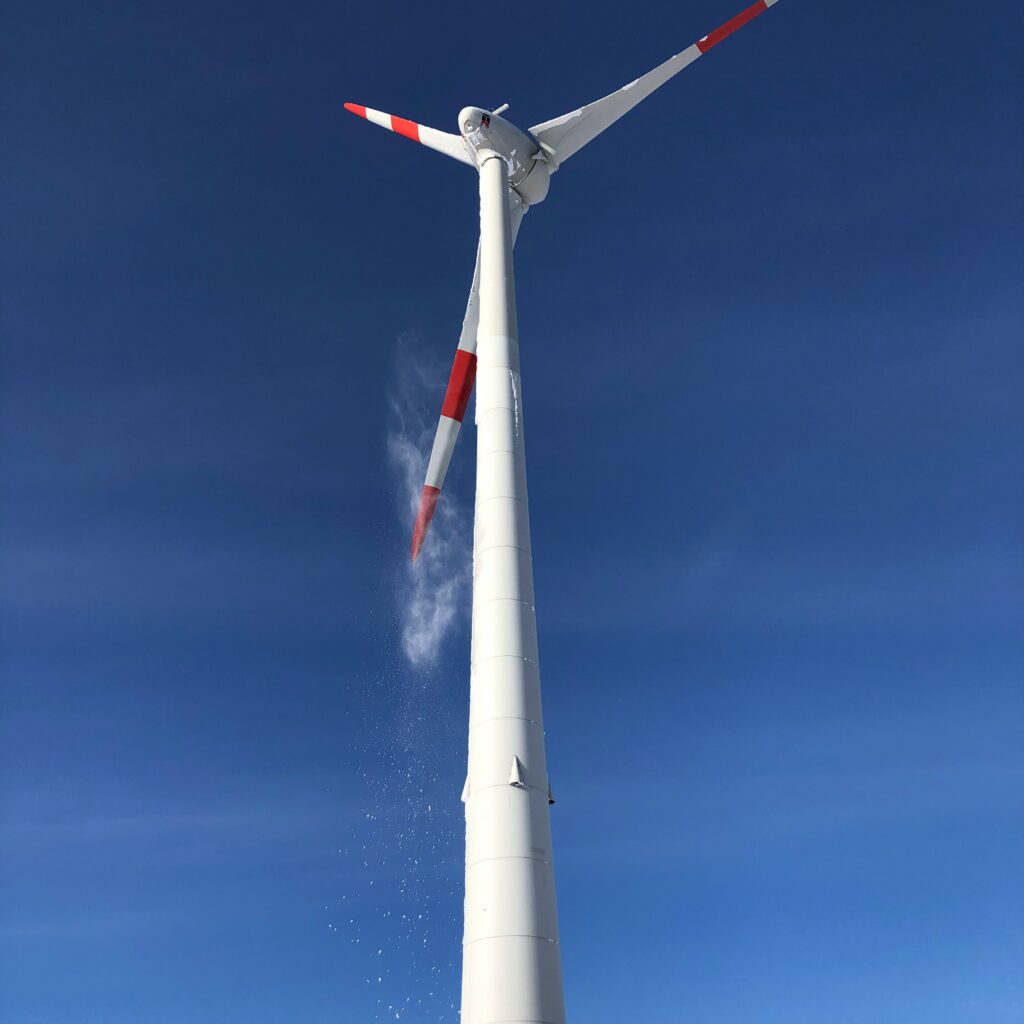
The energy transition is creating opportunities for Australian companies by opening Colombia’s renewable energy market. Colombia targets 6GW of new renewable energy capacity by August 2026. The government is investing US$1.7 billion in Caribbean grid infrastructure alone.
What is the Just Transition conference in Santa Marta?
The Just Transition conference in Santa Marta is an international climate diplomacy event in April 2026. Colombia and the Netherlands co-host the conference. It aims to build a global coalition to accelerate the phase-out of coal, oil, and gas.
Australia joined this initiative as a major fossil fuel producer. The conference focuses on legal, economic, and social pathways for transition. Santa Marta was chosen because it has historically served as a hub for Colombian coal exports.
Which renewable energy projects are active in Colombia?
The renewable energy projects active in Colombia include large-scale solar and wind installations. Atlas Renewable Energy commissioned the 201MW Shangri-La solar project in November 2025. Atlas also signed a power purchase agreement for the 128MWp El Campano Solar Plant.
| Project | Capacity (MW) | Status |
|---|---|---|
| Shangri-La Solar (Atlas) | 201 MW | Operational (Nov 2025) |
| Windpeshi Wind Farm (Ecopetrol) | 205 MW | Construction restart 2026 |
| El Campano Solar (Atlas) | 128 MW | Operational by 2027 |
| Caribbean Grid Expansion | 6,000 MW | Investment target Aug 2026 |
What is the Colombia Solar program?
The Colombia Solar program is a national project of strategic interest (PINES). It replaces traditional electricity subsidies with decentralized solar PV installations. The Caribbean region is the primary target, where electricity tariffs are highest.
This shift from permanent subsidies to local solar capacity creates a significant market. Australian solar technology and maintenance services can fill this gap. The program represents a long-term opportunity for Australian clean energy firms.
How are Australian tech companies expanding into Colombia?
Australian tech companies are expanding into Colombia by leveraging Colombia’s digital ecosystem and pro-innovation regulations. Airwallex and Canva lead this expansion. Both companies use Colombia as a gateway to broader Latin American markets.
What is Airwallex doing in Latin America?
Airwallex is building an autonomous finance platform for cross-border payments in Latin America. The Australian-founded company is valued at US$8 billion after its 2025 funding round. In 2026, Airwallex deploys AI agents to manage treasury, spending, and payments.
North American businesses on Airwallex increased payouts to Latin America by 39 times since 2023. The company added Mexican Spanish to its platform in 2026. Colombia’s high digital consumption makes it an ideal market for Airwallex’s services.
How does Canva support businesses in Colombia?
Canva supports businesses in Colombia by providing AI-powered design tools for SMEs and startups. Canva overtook Atlassian as Australia’s most valuable tech company in late 2025. The company reached a US$65 billion valuation.
At the 2026 World Governments Summit, Canva announced a partnership with The Digital School. This partnership delivers creative tools to millions of learners globally. Colombian businesses use Canva to localize customer experiences and compete internationally.
Which Colombian startups complement Australian technology?
The Colombian startups that complement Australian technology include fintech and delivery platforms. These companies address fundamental gaps in Colombia’s economy. Together with Australian infrastructure, they create a trans-Pacific digital corridor.
- Rappi – A delivery unicorn that leads Colombia’s on-demand economy.
- Habi – A real estate unicorn focused on property transparency in Colombia.
- Welli – A fintech that closed a US$25 million Series A for instant medical financing.
- Guama – Uses open banking and AI to provide credit access to the 80% of applicants rejected by traditional banks.
What education and talent exchange programs exist between Australia and Colombia?
The education and talent exchange programs between Australia and Colombia include scholarships, edtech platforms, and research partnerships. Education is one of Australia’s largest service exports to Colombia. In 2026, the focus has shifted toward transnational education and capability building.
How has the New Colombo Plan evolved in 2026?
The New Colombo Plan has evolved in 2026 by increasing scholarship offers by 50%. The Australian government program deepens engagement with the Indo-Pacific and beyond. Language skills developed by NCP scholars are valuable for firms in Latin American markets.
The reforms expand the program’s reach to more countries and disciplines. Scholars gain Asia-Pacific capabilities that transfer to competitive global markets. Colombian students continue to represent a significant demographic for Australian universities.
What edtech opportunities connect Australia and Colombia?
The edtech opportunities that connect Australia and Colombia include digital learning platforms and content tools. Providers like Soy Startup Latam deliver educational content for Latin American founders. These platforms often use Australian-developed tools for content creation.
The 2026 Canva and Digital School partnership is a prime example. Australian technology bridges the digital divide in high-growth markets like Colombia. Both in-person and digital education channels continue to grow.
How do professional services support Australian businesses in Colombia?
Professional services support Australian businesses in Colombia by providing engineering, legal, and back-office capabilities. Worley and Biz Latin Hub are two prominent examples. These firms reduce the complexity of operating in a foreign market.
What does Worley do in Colombia?
Worley provides engineering, procurement, and construction services in Bogota. The firm employs over 440 people across more than 20 active projects. Worley focuses on energy, mining, and water quality projects.
Worley’s involvement includes helping CAWST improve water quality in Colombian communities. The firm demonstrates the long-term commitment of Australian service companies. As Colombia invests US$1.7 billion in Caribbean grid infrastructure, demand for Worley’s expertise grows.
How does Biz Latin Hub help Australian companies enter Colombia?
Biz Latin Hub helps Australian companies enter Colombia by providing back-office services and commercial representation. Founded in 2014, the company now operates in eighteen countries. Co-founder Craig Dempsey is a former Australian military officer who served in the Middle East.

After working in mining sectors in both Australia and Colombia, Dempsey saw growing demand for business support. Biz Latin Hub started as a startup helping companies move between both countries. Strong trade ties and market opportunity set the company up for multinational success.
What is the Australia-Colombia Business Council?
The Australia-Colombia Business Council (ACBC) is a board that unites efforts between both countries. The ACBC promotes developing economic ties and business communities. The Australian Embassy supports the council.
Biz Latin Hub’s membership in the ACBC reflects its recognized success. The council brings together successful businesspeople in Colombia’s private sector. Members share ties to Australia and its economic interests in the region.
What geopolitical frameworks support Australian business in Colombia?
The geopolitical frameworks that support Australian business in Colombia include trade alliances and mineral agreements. The Pacific Alliance and CPTPP reduce trade barriers. The US-Australia Critical Minerals Framework opens new resource development paths.
How does the Pacific Alliance benefit Australian companies?
The Pacific Alliance benefits Australian companies by reducing trade barriers with four Latin American markets. The bloc includes Chile, Colombia, Mexico, and Peru. Australia seeks Associate Member status, which would harmonize regulatory standards.
The CPTPP provides additional high-standard trade rules across the Pacific. Australia, Chile, Mexico, and Peru are all CPTPP members. Vietnam chairs the CPTPP in 2026, and the agreement drives deeper economic integration.
What is the US-Australia Critical Minerals Framework?
The US-Australia Critical Minerals Framework is a late-2025 agreement to build secure mineral supply chains. The framework reduces reliance on adversarial actors. Colombia’s reserves of copper, nickel, and cobalt make it a natural partner.
However, Colombia’s government pushes for a legally binding global treaty on mineral traceability. This proposal addresses socio-environmental concerns in mining regions. The tension between national sovereignty and global standards remains an ongoing challenge for Australian entrepreneurs doing business in Colombia.
What is the strategic outlook for Australian companies in Colombia?
The strategic outlook for Australian companies in Colombia is defined by high opportunity and regulatory complexity. The synergy between Australian innovation and Colombian potential is strong. However, the 2026 tax reforms and absence of a DTA present significant challenges.
Australian firms must prioritize technological differentiation over basic capital exports. METS, fintech, and renewable energy services offer the strongest positioning. Companies that export intellectual property and specialized services will find the greatest success.
ESG leadership is also essential, particularly in sensitive regions like La Guajira. Community engagement and environmental stewardship build long-term trust. The Australia-Latin America Future Forum in 2026 will test whether both nations can align their policy priorities for mutual benefit.
Ready to Build Your Next Venture?
The Startup VC is a family office and company builder focused on creating scalable B2B service ventures across Latin America. We provide hands-on mentorship, operational expertise, and capital to help founders succeed.
Contact us today to explore opportunities.