
Acquirers of Latin American B2B service companies prioritize positive EBITDA and operational resilience, with valuations for tech-enabled firms reaching 9.7x in 2026.
The Startup VC builds B2B ventures across 17 countries, having guided the successful 100% acquisition of Biz Latin Hub by Vistra. Regional M&A share in Colombia grew to 11% recently, driven by nearshoring trends.
Our operational playbooks help founders build the “sticky” recurring revenue and compliance depth that strategic buyers demand. Below, you will find acquisition criteria, financial benchmarks, and operational metrics for successful B2B exits in Latin America.
What Does Acquisition Criteria Mean for Latin American B2B Service Companies?
Acquisition criteria are the specific metrics and traits that global buyers use to value B2B service firms in the region. Buyers now prioritize operational resilience and positive EBITDA over raw growth. Most acquirers reject the old “burn-to-grow” models. They look for companies with a clear path to profit.
Valuations for tech-enabled B2B services are stabilizing. The average EV to EBITDA multiple reached 9.7x in early 2026. This stability has unlocked more deal activity across the region. Colombia is a top performer in this space. Its tech M&A share grew to 11% recently. The country now has over 2,100 startups. This is three times the regional average growth rate.
Hard-currency revenue is a critical factor for buyers. Most acquirers prefer revenue in US Dollars or Euros. This provides a natural hedge against local currency shifts. It reduces risk for international firms. Nearshoring scalability is also a top priority. Buyers target providers that can serve North American clients from Latin American time zones.
| Factor | Strategic Priority | Impact on Valuation |
|---|---|---|
| EBITDA Status | High | Positive EBITDA is now mandatory for most exits. |
| Revenue Currency | High | USD or EUR revenue reduces currency volatility risk. |
| Nearshoring | Medium | Ability to serve US clients increases buyer interest. |
Why Are Strategic Buyers Increasing Interest in the Latin American B2B Sector?
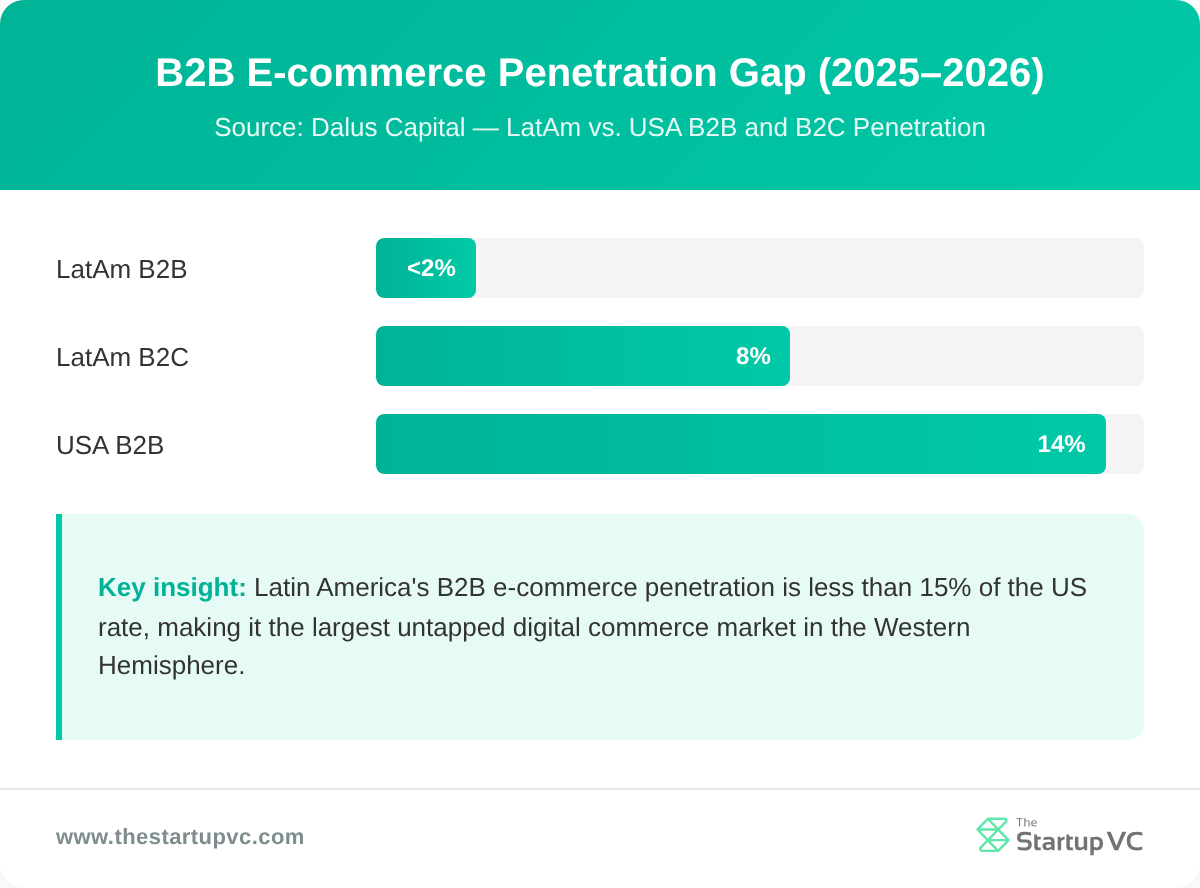
Strategic buyers are increasing interest because the region has a large digitalization gap in the B2B sector. E-commerce penetration in Latin America is under 2% for B2B deals. This is very low compared to 14% in the USA. International firms see this as a massive growth opportunity. They can use their technology to capture this open market.
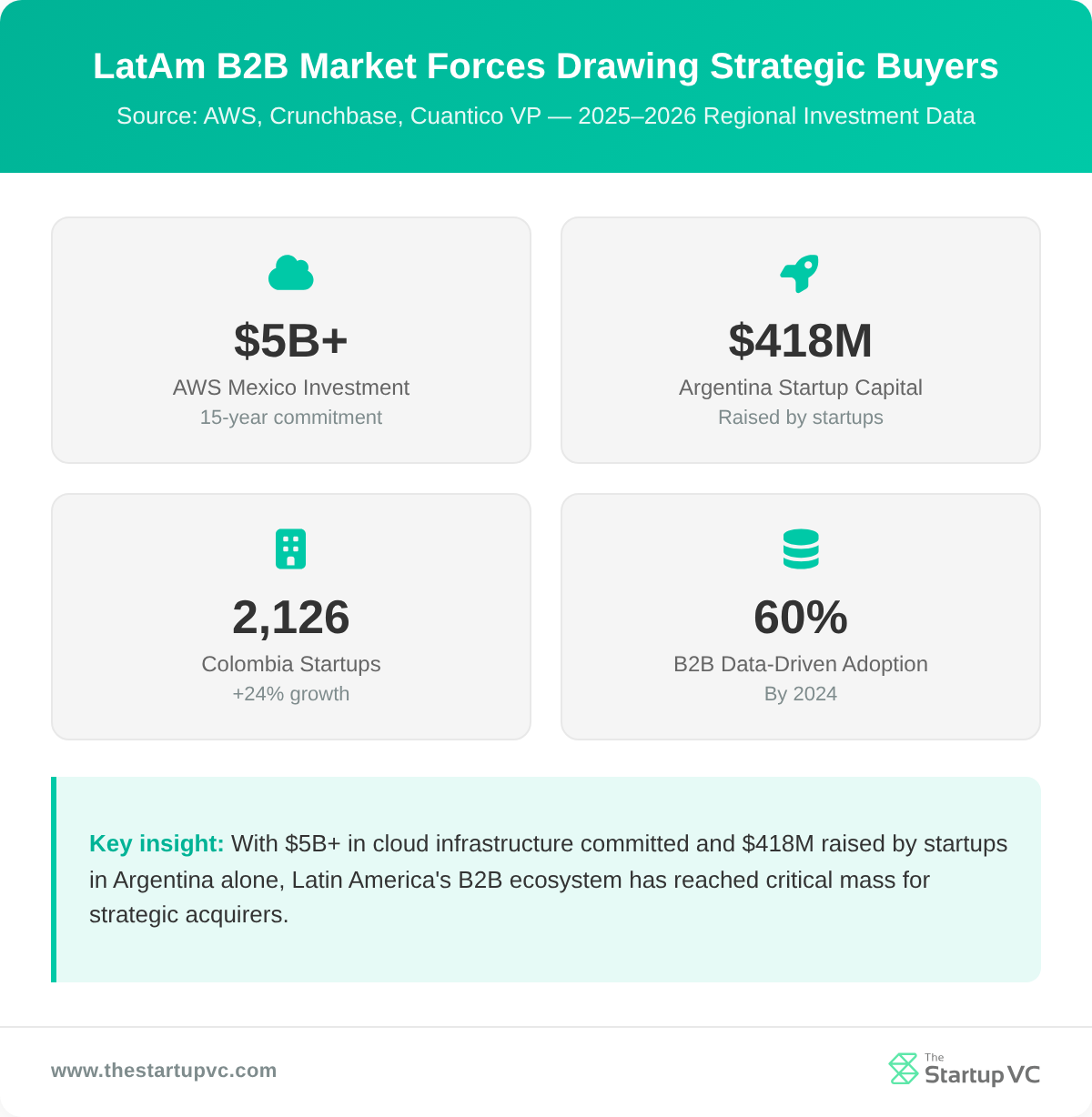
Major global players are investing heavily in local infrastructure. Amazon Web Services launched its Mexico region in January 2025, now fully operational. This project involves more than 5 billion dollars over 15 years. This investment creates a strong foundation for B2B service companies. It provides the reliable tools needed for digital business.
Regional consolidation is also driving strategic interest. Large Latin American firms and global groups are buying specialized startups. They want to add AI and cybersecurity skills to their teams. Startups in Argentina reached 418 million dollars in capital recently. This shows high confidence in the B2B market. Acquirers now use these deals to gain a regional edge.
| Driver | Market Impact | Strategic Result |
|---|---|---|
| Digitalization Gap | Low B2B e-commerce usage | Huge potential for new software and services. |
| Infrastructure | AWS Mexico region launch | Reliable tools for local B2B growth. |
| Consolidation | Buying AI and security skills | Inorganic growth for larger firms. |
How Do Acquirers Evaluate the Financial Health of a LatAm Service Startup?
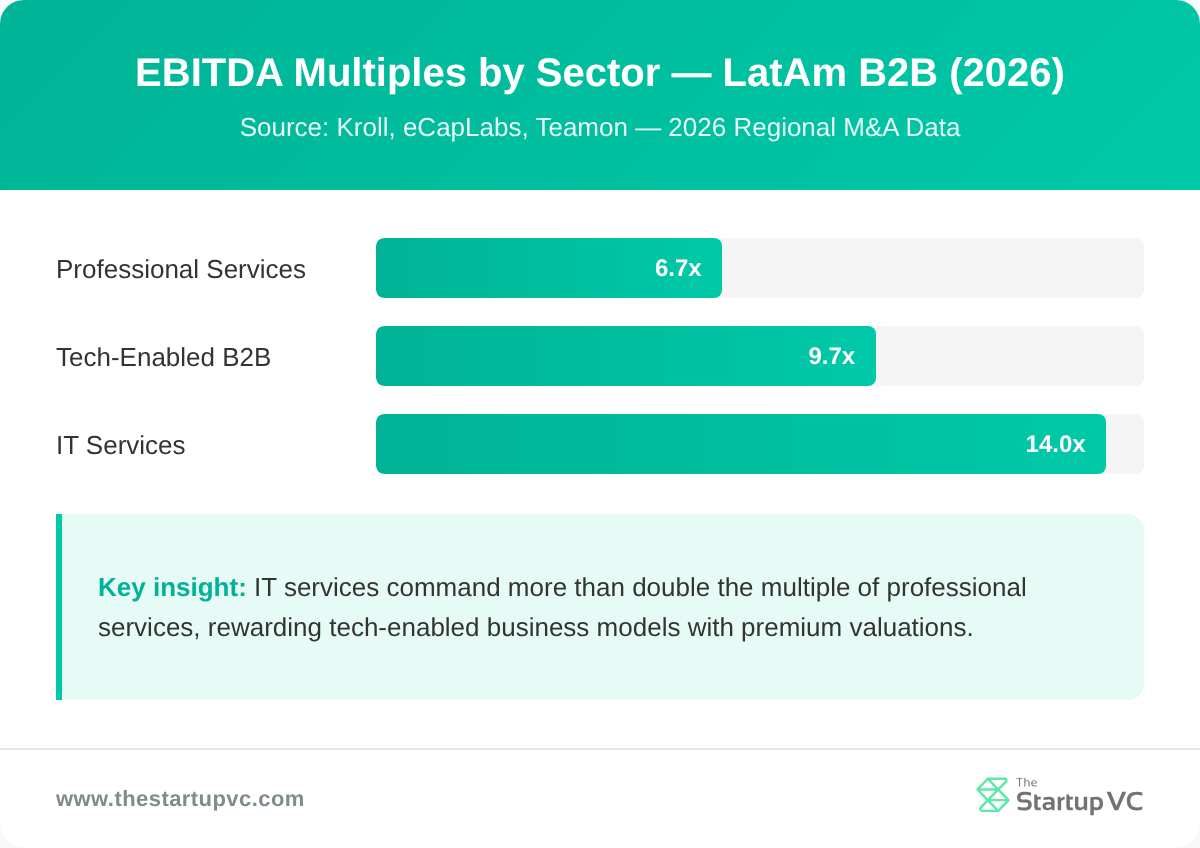
Acquirers evaluate financial health by focusing on EBITDA multiples and the quality of revenue streams. Median multiples for Latin American professional service firms adjusted to 6.7x in early 2026. This reflects a shift to quality and profit. Buyers now favor startups with a clear timeline to positive margins. The era of “growth at any cost” has ended in the regional M&A market.
Revenue quality is a major factor in these valuations. Acquirers apply high discounts to project-based income. They prefer B2B SaaS models with steady recurring revenue. These models often show LTV to CAC ratios twice as high as US firms. This is due to lower regional acquisition costs. Stable recurring income makes a company much more attractive to strategic buyers.
Financial health is now judged by a “Hard Mode” checklist. This list demands proof of a path to positive EBITDA. Acquirers also look for resilience against local currency shifts. They favor startups that maintain stable margins in US Dollars despite regional inflation. This financial discipline is mandatory for a successful exit this year.
| Metric | Target / Benchmark | Significance |
|---|---|---|
| EBITDA Multiple | 6.7x (Median) | Standard valuation baseline for professional services. |
| Revenue Type | Recurring (SaaS) | Highly preferred over project-based income. |
| Margin Currency | US Dollar (USD) | Protects buyer from local currency volatility. |
What Operational Metrics Do Buyers Scrutinize During Due Diligence?
Buyers scrutinize operational metrics by checking efficiency ratios and regulatory compliance during due diligence. They prioritize an LTV to CAC ratio of at least 3:1 for Series A targets. Top firms often reach 5:1 by using organic marketing channels. This efficiency helps them manage rising digital ad costs. Acquirers want to see that your company can grow without excessive spending.
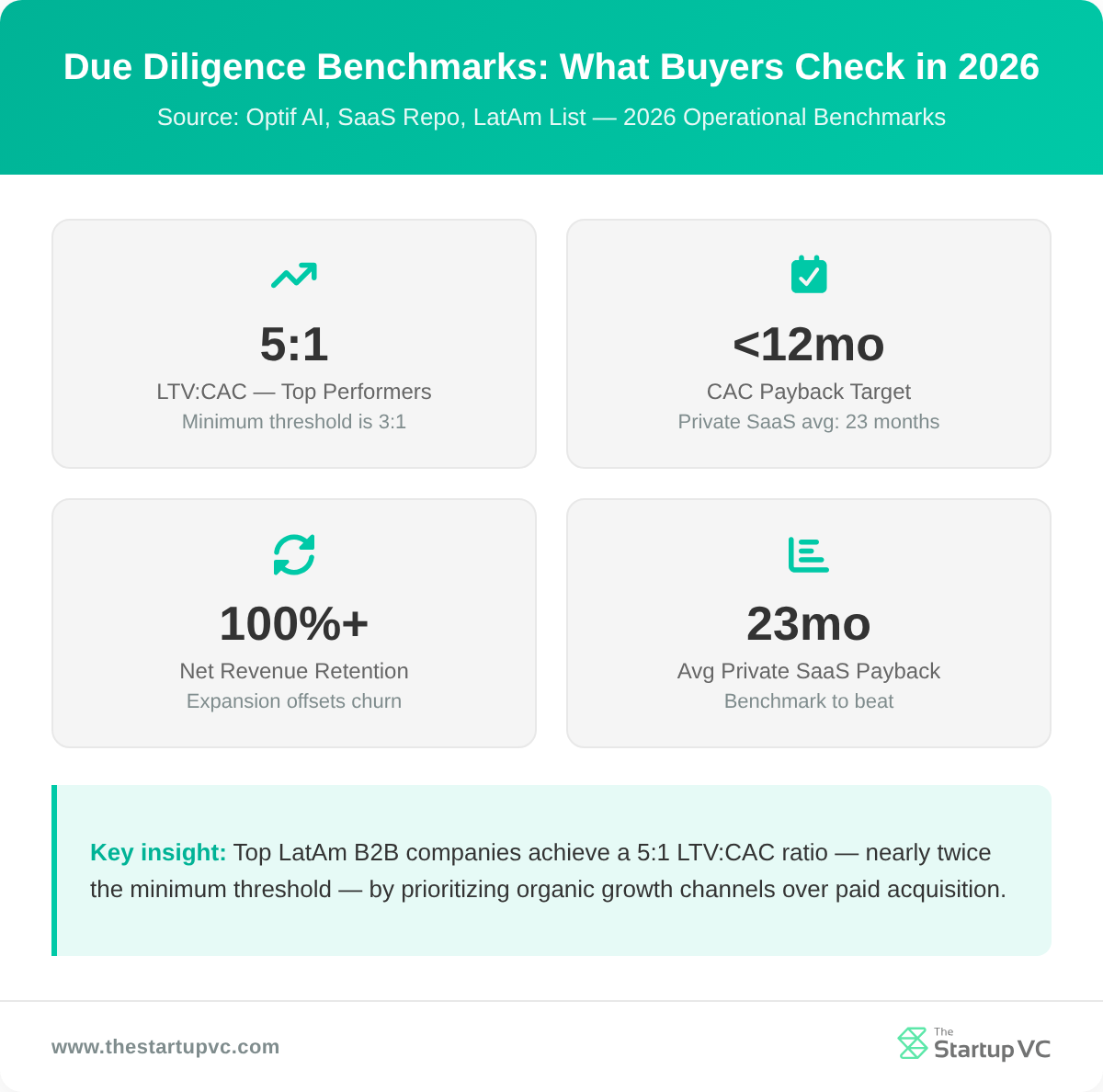
The target CAC payback period is now strictly under 12 months for SMB-focused startups. This is much faster than the 23-month average for private SaaS firms in 2026. Buyers also look for Net Revenue Retention (NRR) above 100%. They discount any expansion revenue not backed by real data. High retention shows that your customers find lasting value in your B2B services.
Regulatory fragmentation is the primary operational risk in Latin America. In Brazil, buyers require seamless integration with government digital tools like Pix. You must prove that your company handles complex local rules effectively. Operational maturity is also measured by your leadership team. Having senior hires in Compliance and Finance shows that your startup is ready for a professional exit.
| Operational Metric | Minimum Target | Strategic Importance |
|---|---|---|
| LTV:CAC Ratio | 3:1 | Measures marketing efficiency and long-term value. |
| CAC Payback Period | < 12 Months | Ensures faster return on acquisition costs. |
| Net Revenue Retention | 100%+ | Proves customer loyalty and product-market fit. |
How Does the Biz Latin Hub Exit Demonstrate Successful Acquisition Strategy?
The Biz Latin Hub (BLH) exit demonstrates a successful acquisition strategy by combining regional scale with mandatory compliance services. Vistra completed the 100% acquisition of BLH on December 4, 2025. This deal followed an affiliate partnership that started in 2018. Vistra aimed to capitalize on a 7% increase in regional foreign investment. This exit proves that B2B service firms with deep local expertise are highly valuable.
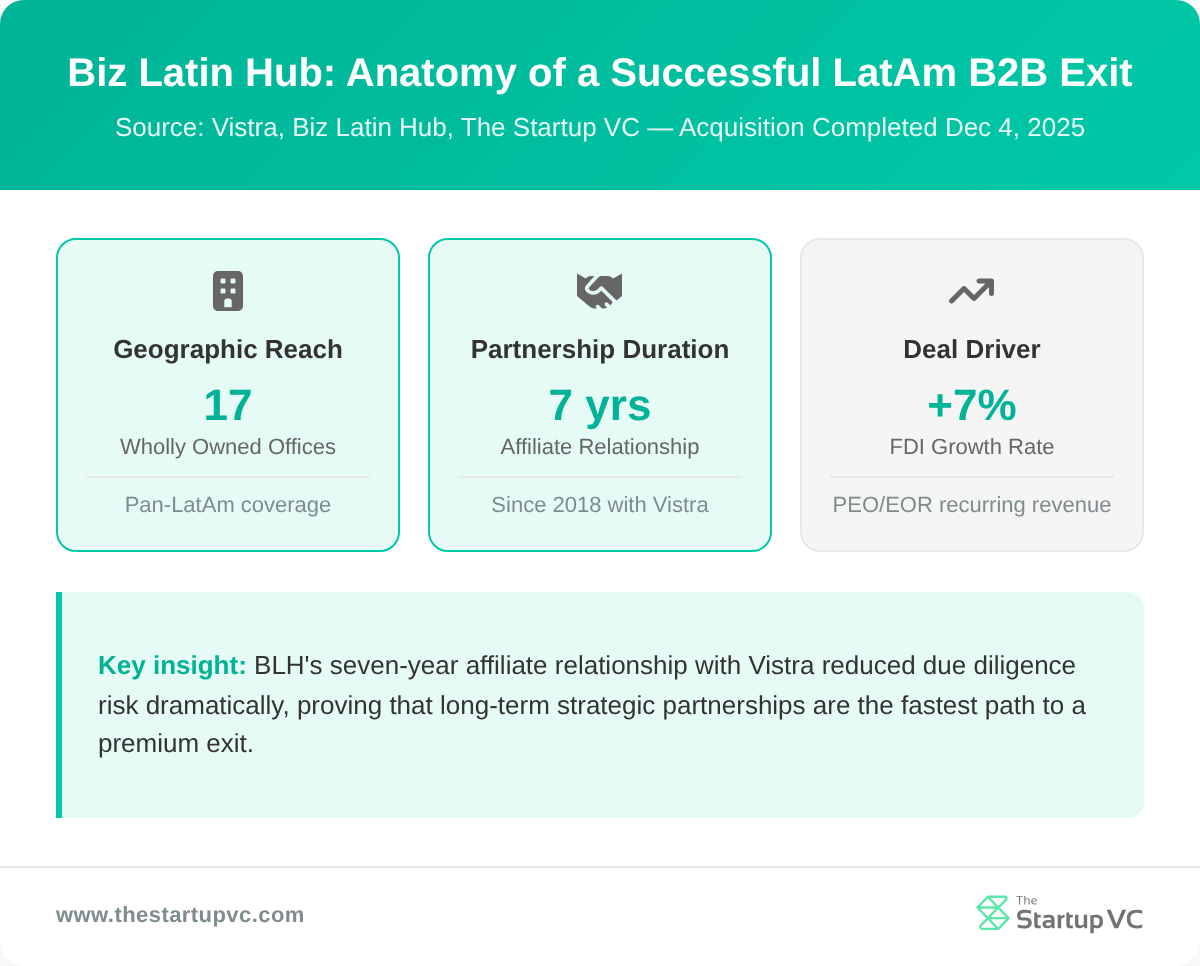
BLH built a massive regional presence before its exit. The company maintained wholly owned offices in 17 countries across Latin America and the Caribbean. This network included major markets like Brazil, Mexico, Colombia, and Chile. Having a direct footprint in multiple countries makes a startup much more attractive to global buyers. It reduces the buyer’s risk when entering new markets.
The BLH business model fits the ideal B2B acquisition profile perfectly. It bundles transactional services like company formation with mandatory monthly compliance. This ensures a high proportion of “sticky” recurring revenue. A key driver of its value was the Professional Employer Organization (PEO) model. This model generates monthly income per managed employee. It is a high-margin service that scales easily across a large network.
| Case Study Metric | BLH Achievement | Impact on Acquisition |
|---|---|---|
| Regional Presence | 17 wholly owned country offices | Immediate scale for the global buyer. |
| Revenue Model | Bundled compliance + PEO | High recurring revenue and “sticky” services. |
| Partnership History | Affiliate since 2018 | Long-term trust reduced due diligence risk. |
What Questions Do Founders Ask Most Often About Selling a B2B Company in Latin America?
What are the typical EBITDA multiples for B2B exits in LatAm?
Median multiples for professional service firms were 6.7x in early 2026. IT services often reach 14.0x due to high demand. Tech-enabled firms average around 9.7x recently. These figures show a shift toward quality and profitability.
How long does the due diligence process take for regional startups?
The process usually takes three to six months for B2B service companies. It involves deep checks on financials and compliance. Acquirers scrutinize your team structure and client concentration. You should prepare your data rooms early to avoid delays.
Why is hard-currency revenue important for an exit?
Hard-currency revenue in USD or EUR reduces risk for buyers. It protects the acquirer from local currency inflation. This makes your startup much more attractive to global firms. It ensures that your profit margins remain stable.
Can I exit my company if I only operate in one country?
Yes, you can exit if you have high market share. However, regional scale increases your valuation. Having offices in multiple countries reduces the buyer’s risk. It shows that your business model works across different markets.
What is the role of compliance in a successful acquisition?
Compliance is a mandatory due diligence item for all regional exits. Buyers check for integration with local government digital systems. They want to see senior hires in Risk and Finance. Good compliance proves that your company is ready for global integration.
Ready to Scale and Exit Your B2B Venture?
The Startup VC is Craig Dempsey’s family office and company builder. We create, back, and guide scalable ventures across Latin America. Our team offers practical support to help founders prepare for strategic acquisitions. We focus on operational excellence and long-term value creation.
Our portfolio includes successful exits like Biz Latin Hub. We have a deep network across 17 countries in the region. We help you build the financial and operational health that global buyers want.
Contact us today to discuss your path to a successful exit.